
Where it goes
Traditional practice favours the north-east, with the person facing east or north while praying. In an apartment you rarely get a free choice — you get a niche, a passage wall, or a corner of the dining room.
What matters practically: it should not open directly onto a bathroom door or the head of a bed; it needs somewhere to stand or sit without blocking circulation; and it needs ventilation, because lamps and camphor in a sealed niche stain a ceiling within months.
Three formats that work in apartments
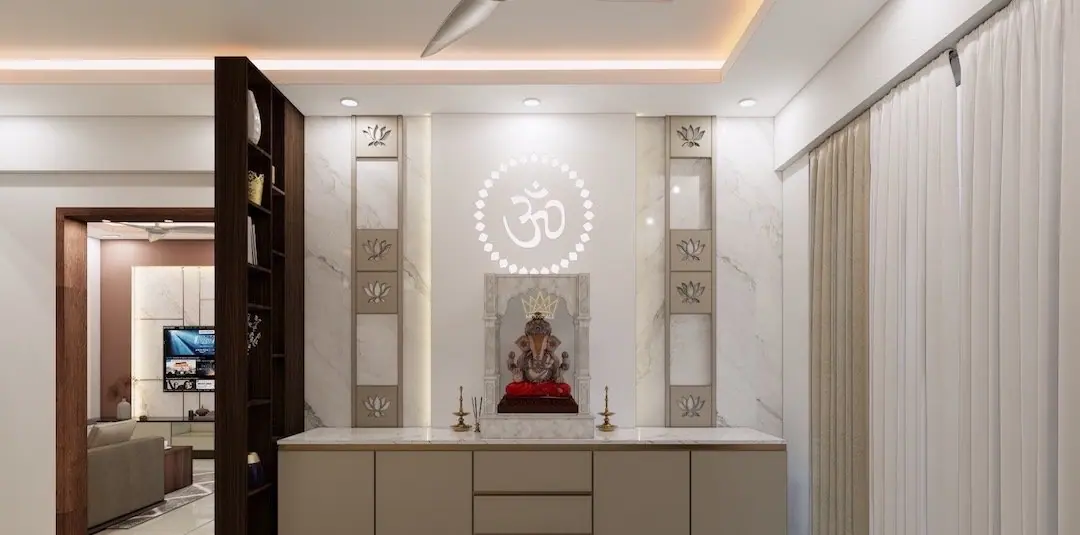
The niche unit. A recessed cabinet 450–600mm deep with shutters, in a dining or passage wall. Closed, it reads as joinery. The most common and most flexible answer.
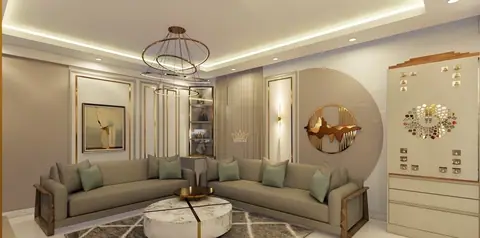
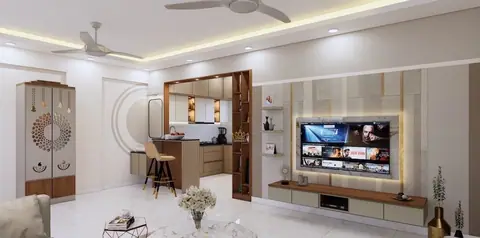
The corner unit. A floor-standing or wall-hung piece taking a corner of the dining, usually with a carved or fluted door and a marble or Corian platform.
The room. Where the plan gives you a small dedicated space, a full-height door, a raised platform and proper ventilation turn it into the calmest room in the house.
Materials and detailing
Platform: marble, granite or Corian — something you can wipe clean of oil, ash and kumkum. Never bare veneer.
Doors: a carved wooden door, a fluted panel, or a jaali in wood or brass. This is the one place in a contemporary home where ornament is expected and reads correctly.
Back panel: a single quiet surface — marble, textured paint or brass sheet. Resist filling it.
Storage: drawers below for lamps, wicks, oil and photographs. This is what stops the platform becoming a shelf of clutter.
Above: if you burn a lamp, plan a small vent or leave the top open. A closed niche with a lamp is a stain waiting to happen.
Lighting
Two layers. A warm 2700K wash from a concealed strip at the top of the niche, so the space glows when everything else is off; and a small directional spot on the idol or image. Put both on their own switch by the door.
Avoid cool white here more than anywhere else in the home. It flattens brass and makes marble look grey.
Keeping it contemporary
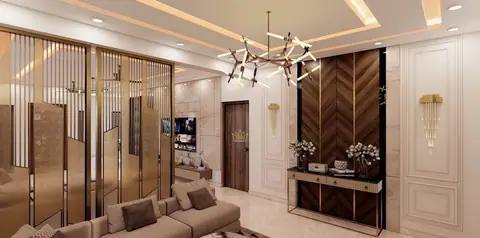
The trap is treating the pooja space as a stylistic exception — a traditional object dropped into a modern home. It works better when it shares the home's material language and simply concentrates it: the same veneer, the same stone, the same metal, executed with more detail. Ornament belongs in the door and the jaali; the rest can be as quiet as the rest of the house.
Want this applied to your own home? Start a project or read the material library.