
Cost is built from running feet, not square feet
Almost every serious interior quotation in Bengaluru is priced per running foot of joinery, sometimes per square foot of the unit's face area. Your flat's carpet area only matters because it constrains how much joinery fits.
This is why a 1,250 sq ft 2BHK with four wardrobes, a full modular kitchen, a crockery unit and a TV unit can cost more than a 1,700 sq ft 3BHK with two wardrobes and an open living room. When you compare two quotations, the first thing to reconcile is how many running feet each one includes. If one is cheaper and has thirty fewer running feet, it is not cheaper.
The line items you should see
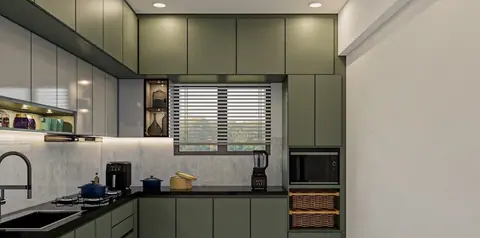
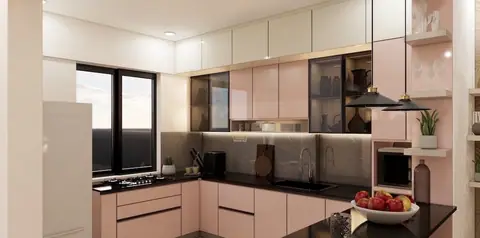
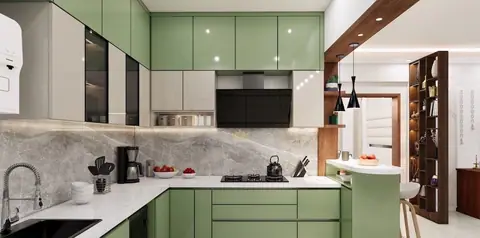
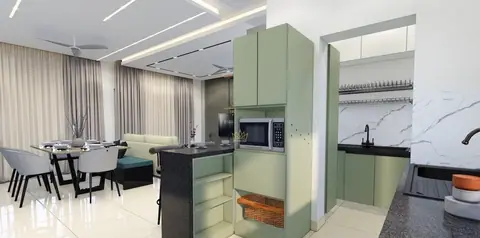
Modular kitchen — base units, wall units, tall unit, counter, dado, and accessories, each with its own running-foot figure. Wardrobes — per bedroom, with loft called out separately. TV / entertainment unit. Crockery or display unit. Beds and bed backs. Study or work surfaces. Foyer unit. Pooja unit. Vanities.
Against each of those, the quotation should name the board grade (BWR, BWP, HDHMR, WPC), the shutter finish (0.8mm laminate, 1mm textured, acrylic, PU lacquer, veneer) and the hardware brand. If those three are missing, the number in the right-hand column means very little.
What is usually excluded — and adds up
In Bengaluru, these commonly sit outside a "full home interiors" price and are the main source of after-the-fact budget shock:
False ceiling and its electrical work · wall painting and putty · plumbing point changes in the kitchen and bathrooms · electrical rewiring and additional points · loose furniture, mattresses and dining chairs · curtains, blinds and pelmet fabrication · appliances, chimney and hob · air conditioners · civil work such as demolishing or building a wall · deep cleaning before handover.
None of these are unreasonable exclusions. But ask for them to be written down as exclusions, and get a rough figure for the ones you will definitely need. Together they can add a fifth to a quarter to the total.
The four things that actually move the number
Volume of joinery. The biggest single factor, and the one you control by deciding what you genuinely need.
Specification level. BWR + 0.8mm laminate + basic hinge, versus BWP + 1mm textured laminate + soft-close everywhere, on the same drawing. Both are honest. They are different numbers.
How much is made rather than bought. Standard modules are efficient. A curved reception unit drawn for one wall is not. This is where premium becomes luxury.
Site conditions. Out-of-square walls, unlevelled floors, a plumbing point in the wrong place. This is why a firm number before a site measurement is a number that will move.
How to compare two quotations fairly
Put them side by side and reconcile four columns: running feet per unit, board grade per unit, shutter finish per unit, hardware brand and rating. Then compare the exclusions list. Only after all four match are you comparing price.
A single lump sum with no breakdown is not comparable to anything. Ask for the breakdown before assuming it is cheaper — in our experience it usually is not, it is just less specific.
Where to spend, and where not to
Worth paying for: BWP ply in the kitchen and wet areas; soft-close hardware on everything you open daily; wardrobe internals; 2700–3000K lighting with CRI 90+; proper edge banding; a well-planned kitchen work triangle.
Rarely worth it: high-gloss finishes in rooms with strong direct light; elaborate false ceilings in bedrooms; decorative treatments on walls furniture will cover; premium finishes inside cupboards nobody sees.
Want this applied to your own home? Start a project or read the material library.