
BWR — Boiling Water Resistant
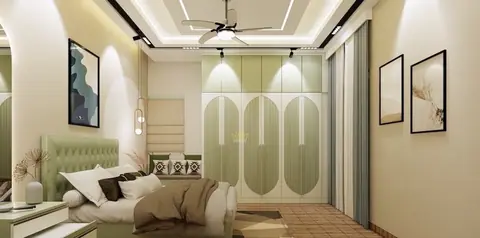
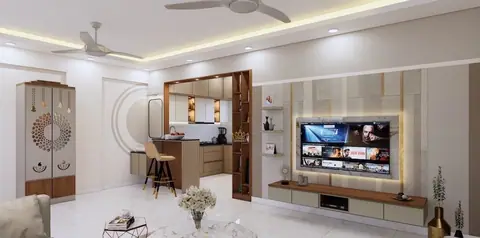
Urea-formaldehyde bonded, and the everyday standard for dry-area carcass work: wardrobes, storage units, beds, TV units. It resists occasional moisture and humidity. It does not like standing water, and it should still be sealed on all six faces with every cut edge banded.
BWR is not a compromise in a bedroom. It is the correct specification for the job.
BWP / Marine — Boiling Water Proof
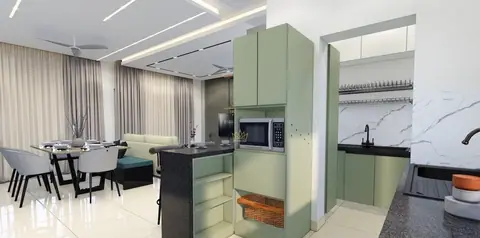
Phenolic bonded, denser core, fewer internal voids. This is what belongs in kitchens, utility areas and bathroom vanities. The difference shows up years later at the sink cut-out and the base of a tall unit, which is exactly where you cannot easily fix it.
Ask for the grade to be written into your quotation, line by line. A studio confident in its specification will have no problem doing that.
HDHMR — High Density High Moisture Resistance
Not plywood at all — a dense engineered board with no grain and a very flat face. It is the right substrate for anything that will be lacquered, membrane-pressed or CNC-routed, because plywood's grain telegraphs through a paint finish and HDHMR's does not.
Moisture resistant, but not a substitute for BWP under a sink.
WPC and PVC board
Polymer boards, effectively waterproof, no grain. The sensible choice for bathroom vanities, balcony storage and utility cabinets where water is unavoidable and the load is light. Screw holding is lower than plywood, so avoid them for tall units carrying weight.
What to insist on, whatever the grade
Edge banding on every cut edge, including the ones nobody sees. Sealed cut-outs around sinks and hobs. And a written specification on the quotation rather than a verbal assurance in a showroom.
Board grade is the part of a home you will never see and will absolutely notice if it is wrong.
Want this applied to your own home? Start a project or read the material library.