
The two numbers
Colour temperature. Use 2700–3000K in living areas and bedrooms. 4000K and above renders wood grey, makes warm stone look dead and fabric look flat — it is why a home can be built exactly to its render and still look wrong. Keep one temperature throughout the home; mixing them across an open plan is instantly visible.
CRI. Colour Rendering Index, out of 100. Specify CRI 90+. Below 80, the veneer you chose from a sample under daylight will not be the veneer you see at night. The price difference between CRI 80 and CRI 90 fittings is small; the visual difference is not.
Three layers, every room
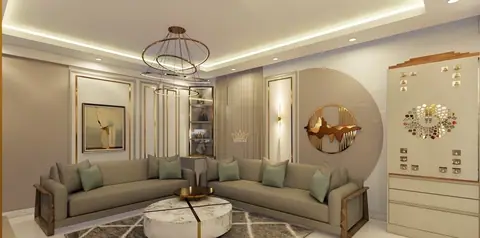
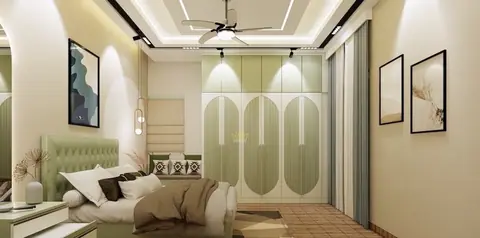
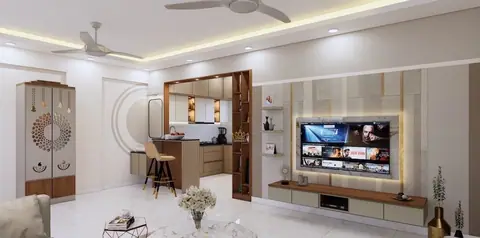
Ambient. The general light — cove, recessed downlights, or a well-chosen ceiling fixture. It should be dimmable and it should never be the only layer.
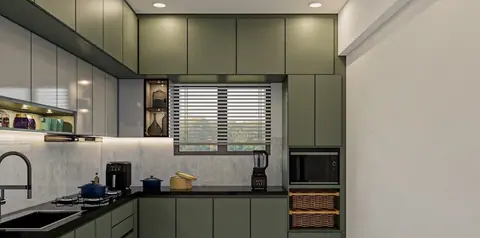
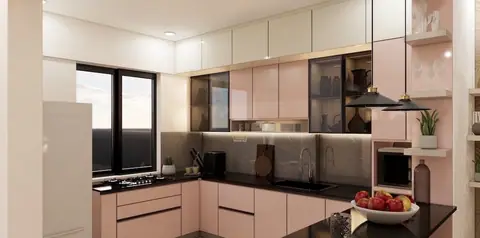
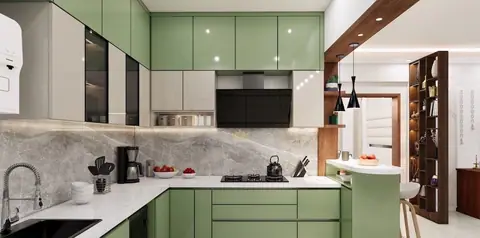
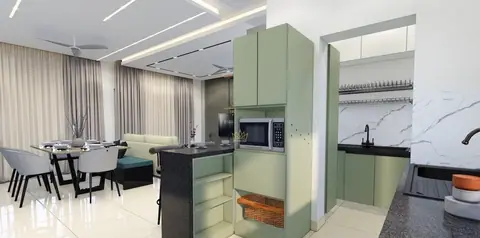
Task. Light where work happens: under kitchen wall units, over the study desk, beside the reading chair, at the dressing mirror. Under-cabinet kitchen lighting is the single most-noticed upgrade in a home, because without it you cook in your own shadow.
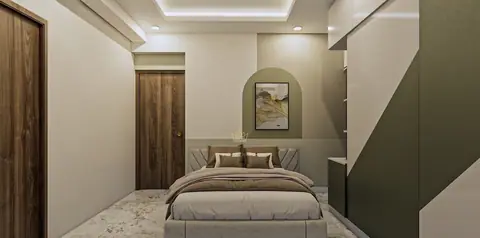
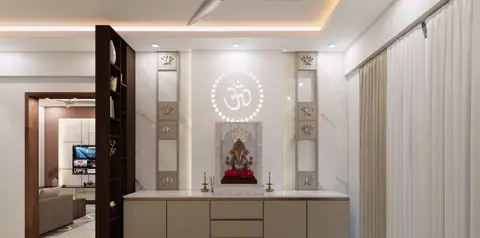
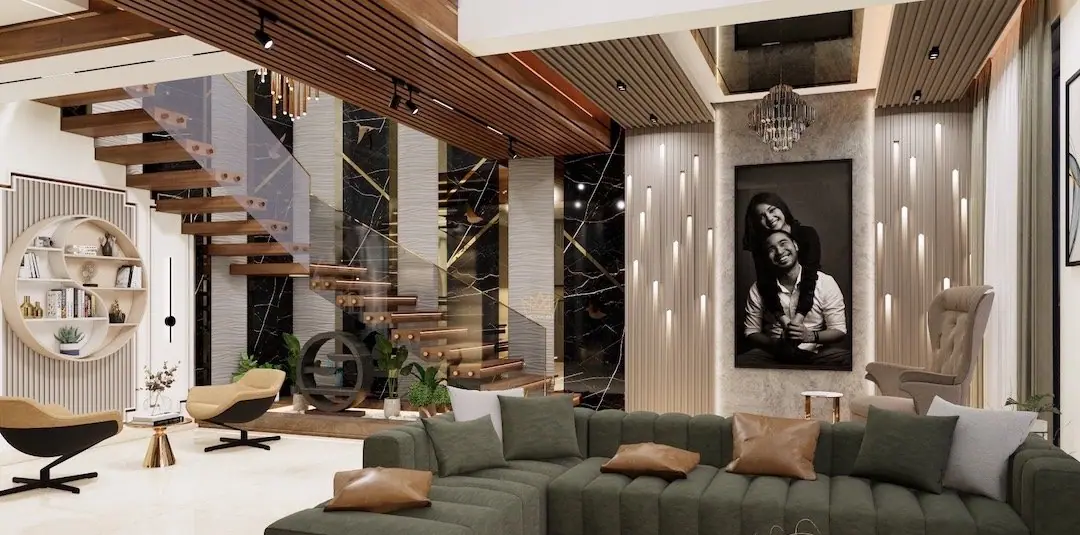
Accent. Directional light on the things worth looking at — a stone feature wall, art, joinery, planting. This is what gives a room depth rather than flatness.
A room with only the ambient layer is a lit box. A room with all three has atmosphere at every time of day.
Where each fixture belongs
Cove / profile lighting — perimeter ambient, niches, under-counter, wardrobe internals. Choose a driver you can replace later; it will fail before the LED does.
Downlights — position them relative to furniture, not to the centre of the ceiling. A downlight over the edge of the sofa is useful; one over the middle of the floor is not.
Track and spots — art, stone, joinery. 15° to 36° beam depending on what is being lit.
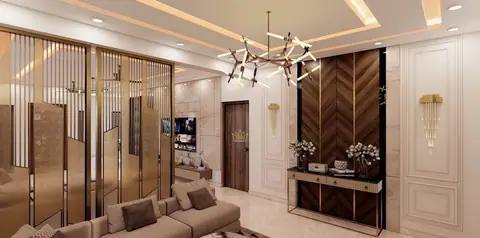
Decorative pendants — dining, stairwell, double-height volumes, foyer. Decide these before the false ceiling closes; the hook, the drop and the power point all have to be in place first, and lead times run to weeks.
Lamps — the layer almost everyone omits. A floor lamp and a table lamp change a living room more than another four downlights.
Switching and control
Put each layer on its own circuit. A living room where you can have only the coves on at 9pm is a different room from one where it is all or nothing. Two-way switching at the bedroom door and at the bedside is a small cost during wiring and a permanent daily comfort.
Dimming has to be specified at the fitting and the driver, not added later. Decide at design stage.
Daylight is a material too
Bengaluru gives you generous, fairly soft daylight for most of the year. Sheer curtains rather than heavy ones on the windows you sit near; light-toned surfaces opposite a window to bounce it deeper into the room; and mirrors placed to reflect a window rather than a wall. None of this is on the electrical drawing, and all of it changes how the home feels at 4pm.
Want this applied to your own home? Start a project or read the material library.